

Fitness Starts with One Step In a world filled with fitness trends, workout challenges, and quick-fix promises, it’s easy to feel overwhelmed before you even begin. Social media often showcases dramatic transformations, intense workout routines, and seemingly perfect lifestyles that can make starting a fitness journey feel intimidating. However, the truth is much simpler: fitness starts with one step. Whether your goal is to lose weight, build strength, improve your health, increase your energy, or simply feel better in your daily life, every successful fitness journey begins with a small decision to take action. You do not need a gym membership, expensive equipment, or a perfectly planned routine to get started. What matters most is taking that first step and continuing to move forward. The Power of Small Beginnings Many people delay their fitness goals because they believe they need to make massive changes overnight. They think they must exercise for hours every day, completely change their diet, and achieve instant results. This mindset often leads to frustration and burnout. The reality is that lasting fitness is built through small, consistent actions. A ten-minute walk today can become a thirty-minute walk next month. One healthy meal can lead to better eating habits throughout the week. Small victories create momentum, and momentum creates lasting change. When you focus on manageable goals rather than dramatic transformations, fitness becomes less intimidating and more achievable. Every step, no matter how small, moves you closer to a healthier version of yourself. Why Taking the First Step Matters The hardest part of any fitness journey is often getting started. Fear of failure, lack of confidence, and uncertainty can prevent people from taking action. However, action creates confidence. Once you begin moving, your mindset shifts. You start to see that progress is possible. You gain experience, build routines, and develop habits that support your goals. Even if your first workout is short or your first healthy choice seems insignificant, it still counts. Remember, no one starts as an expert. Every athlete, fitness enthusiast, and health-conscious individual once stood exactly where you are now—at the beginning. Building Healthy Habits That Last Fitness is not about perfection. It is about consistency. The most successful fitness journeys are built on sustainable habits rather than temporary motivation. Here are a few simple habits that can help you get started: 1. Move Every Day Physical activity does not have to be complicated. Walking, stretching, cycling, dancing, or even household chores can contribute to your fitness. The goal is to make movement a regular part of your daily routine. 2. Stay Hydrated Water plays a vital role in energy levels, recovery, and overall health. Drinking enough water throughout the day supports your fitness efforts and helps your body function at its best. 3. Prioritize Sleep Many people underestimate the importance of sleep in achieving fitness goals. Quality sleep supports muscle recovery, hormone balance, and mental well-being. Aim for seven to nine hours of sleep each night whenever possible. 4. Make Better Food Choices You do not need a perfect diet to improve your health. Focus on adding more fruits, vegetables, lean proteins, and whole grains to your meals. Small improvements can lead to significant results over time. 5. Celebrate Progress Fitness progress is not measured solely by the number on a scale. Increased energy, improved mood, better endurance, and stronger habits are all signs of success. Celebrate every achievement, no matter how small. Overcoming Common Obstacles Every fitness journey comes with challenges. Understanding how to overcome them can help you stay committed. Lack of Time Many people believe they need an hour or more each day to exercise. In reality, even 15 to 20 minutes of physical activity can provide benefits. Focus on what you can do rather than what you cannot. Lack of Motivation Motivation naturally comes and goes. Instead of relying on motivation, create routines and habits. Schedule your workouts like appointments and commit to showing up, even when you do not feel inspired. Fear of Failure Setbacks are a normal part of any journey. Missing a workout or enjoying an unhealthy meal does not erase your progress. The key is to get back on track and continue moving forward. Comparing Yourself to Others Your fitness journey is unique. Comparing your progress to someone else’s can lead to discouragement. Focus on becoming a better version of yourself rather than competing with others. The Mental Benefits of Fitness Fitness is not only about physical health. Regular exercise can improve mental well-being in powerful ways. Physical activity helps reduce stress, boost mood, improve focus, and increase self-confidence. Many people begin exercising to change their appearance but continue because of how much better they feel mentally and emotionally. The confidence gained from achieving fitness goals often extends into other areas of life, including work, relationships, and personal growth. Creating a Lifestyle, Not a Temporary Fix One of the biggest mistakes people make is treating fitness as a short-term project. They focus solely on reaching a specific goal and then stop once they achieve it. True fitness is a lifestyle. It involves making choices that support your long-term health and well-being. When you view fitness as an ongoing journey rather than a destination, it becomes easier to maintain healthy habits for life. Start with activities you enjoy. Choose foods that nourish your body while still allowing flexibility. Build routines that fit your lifestyle. The more sustainable your approach, the more likely you are to succeed. Your Journey Begins Today No matter your age, fitness level, or experience, there is no better time to begin than now. You do not need to wait for Monday, a new month, or the perfect circumstances. Progress begins the moment you decide to take action. Every healthy choice matters. Every workout counts. Every step forward brings you closer to your goals. Remember, fitness does not start with a marathon, an intense workout, or a complete lifestyle overhaul. Fitness starts with one step. Take that step today, stay
SEO
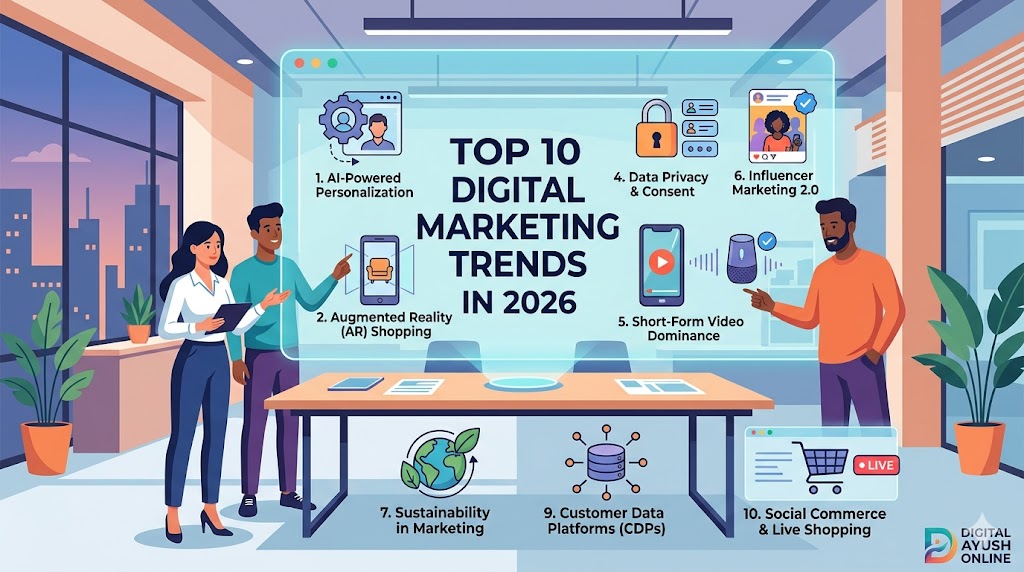
1. AI-Driven Marketing Becomes the Core Engine Artificial intelligence is no longer just a supporting tool—it is the backbone of modern digital marketing in 2026. Brands now rely heavily on generative AI for content creation, customer segmentation, ad optimization, and real-time decision-making. Companies like OpenAI, Google, and Adobe are leading this transformation. Marketers use AI to generate ad copies, product descriptions, email campaigns, and even video scripts in seconds. The biggest shift is toward “AI co-pilots” that assist marketers in planning full campaigns, predicting outcomes, and automatically optimizing performance across platforms. 2. Hyper-Personalization at Scale In 2026, personalization goes far beyond simply adding a customer’s name to an email. Brands now use predictive analytics and behavioral data to deliver highly individualized experiences in real time. Platforms like Amazon and Netflix have set the standard by recommending products and content based on deep learning models that analyze browsing behavior, purchase history, and engagement patterns. Marketers are increasingly using AI-driven customer journey mapping to anticipate needs before users even express them, making marketing feel almost “invisible” but extremely relevant. 3. Short-Form Video Dominates All Platforms Short-form video continues to dominate digital attention spans in 2026. Platforms like TikTok, Meta (Instagram Reels and Facebook), and YouTube are the main distribution channels for viral content. Brands now prioritize “video-first” strategies, where campaigns are designed for 10–60 second storytelling rather than long-form content. The emphasis is on authenticity, fast hooks, and mobile-first creative formats. Even B2B marketing has adopted short-form video for thought leadership, product demos, and customer testimonials. 4. Voice and Conversational Search Optimization With the rise of smart assistants and AI search interfaces, voice search is reshaping SEO strategies. Consumers now interact with search engines in conversational language rather than typed keywords. Google continues to evolve its AI-powered search systems, while Amazon expands the use of Alexa-based shopping and voice commerce. Marketers must now optimize content for natural language queries, question-based keywords, and AI-generated search summaries. This shift is also reducing the importance of traditional keyword stuffing and increasing the value of semantic SEO. 5. Social Commerce Becomes a Primary Sales Channel Social media platforms are no longer just for engagement—they are full-fledged marketplaces. In 2026, users can discover, evaluate, and purchase products without leaving the app. Meta, TikTok, and Shopify are heavily invested in integrating shopping experiences directly into social feeds. Influencer-driven product tagging, live shopping events, and one-click checkout systems are driving massive conversion rates. This trend has blurred the line between entertainment and e-commerce. 6. Privacy-First Marketing and Cookieless Future Data privacy has become one of the most important pillars of digital marketing. With stricter regulations and the gradual elimination of third-party cookies, brands must rely more on first-party data and consent-based tracking. Google has been central to the transition away from third-party cookies in its Chrome ecosystem, while Apple has strengthened privacy features across iOS devices. Marketers now focus on building trust through transparent data collection, loyalty programs, and value exchange strategies where users willingly share information in return for better experiences. 7. Evolution of Influencer Marketing into Creator Ecosystems Influencer marketing has matured into a full creator economy ecosystem. Instead of one-off brand collaborations, companies now build long-term partnerships with creators across platforms. Meta and TikTok provide monetization tools, while brands increasingly treat creators as strategic media partners rather than promotional channels. Micro and nano influencers are becoming more valuable than celebrity endorsements because of their higher engagement rates and authentic audience connections. 8. Immersive Marketing Through AR and VR Augmented reality (AR) and virtual reality (VR) are redefining how consumers interact with brands. In 2026, immersive experiences are used for product trials, virtual showrooms, and branded storytelling environments. Meta is pushing the metaverse ecosystem, while Apple is advancing spatial computing experiences through devices like Vision Pro. Retail brands are using AR for “try-before-you-buy” experiences, especially in fashion, furniture, and cosmetics, significantly reducing return rates and increasing buyer confidence. 9. Marketing Automation Powered by AI Agents Marketing automation has evolved from simple email workflows to fully autonomous AI agents that manage campaigns end-to-end. Platforms like Salesforce and HubSpot now integrate AI systems that can generate leads, nurture prospects, and optimize conversion funnels automatically. These AI agents continuously test variations of ads, landing pages, and messaging, learning in real time to maximize ROI with minimal human intervention. 10. First-Party Data and CRM-Centric Strategies As third-party tracking declines, first-party data has become the most valuable marketing asset. Businesses are investing heavily in CRM systems and customer data platforms to unify user information across touchpoints. Salesforce and HubSpot play a central role in helping companies manage customer relationships, track behavior, and personalize communication. Brands that successfully collect, analyze, and activate their own data are gaining a significant competitive advantage in targeting accuracy and customer retention. Conclusion Digital marketing in 2026 is defined by intelligence, automation, and deep personalization. Artificial intelligence, immersive technologies, and privacy-first strategies are reshaping how brands communicate with audiences. Companies that adapt quickly to these trends—especially those leveraging AI, social commerce, and first-party data—will dominate the digital landscape. The future of marketing is not just about reaching customers; it is about predicting, personalizing, and participating in their digital lives in meaningful ways.
SEO
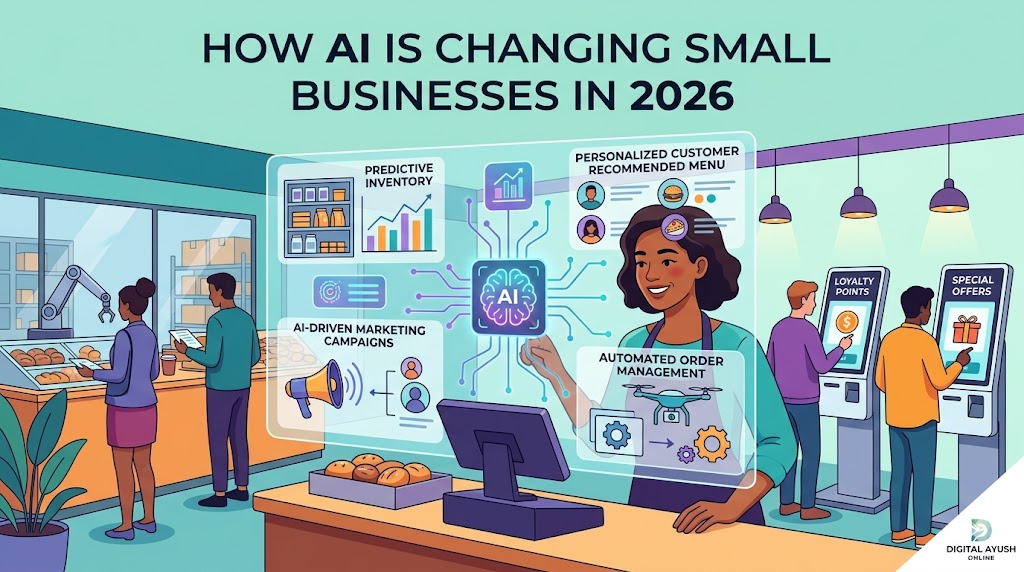
How AI Is Changing Small Businesses in 2026 Artificial Intelligence (AI) is no longer a technology reserved for large corporations with massive budgets. In 2026, small businesses are increasingly adopting AI-powered tools to streamline operations, improve customer experiences, and compete more effectively in the digital marketplace. Key Ways AI Is Transforming Small Businesses 1. Customer Support Automation AI-powered chatbots and virtual assistants can handle customer inquiries 24/7. They can answer common questions, process orders, and direct customers to the right resources, reducing response times and improving customer satisfaction. Benefits: Faster customer support Reduced workload for staff Round-the-clock availability 2. Smarter Marketing Campaigns AI helps businesses create personalized marketing campaigns by analyzing customer behavior and preferences. It can suggest content ideas, optimize email campaigns, and identify the best times to reach potential customers. Benefits: Better customer targeting Higher engagement rates Improved return on marketing investment 3. Content Creation and Management Many small businesses use AI tools to generate blog posts, social media captions, product descriptions, and marketing materials. While human oversight remains important, AI can significantly speed up content production. Benefits: Saves time Increases content output Reduces content creation costs 4. Data Analysis and Business Insights AI can analyze large amounts of business data and provide actionable insights. Small business owners can identify trends, forecast sales, and make more informed decisions without needing advanced analytical skills. Benefits: Better decision-making Improved forecasting Enhanced business planning 5. Inventory and Supply Chain Management Retailers and e-commerce businesses are using AI to predict demand, manage inventory levels, and reduce waste. AI can help ensure that popular products remain in stock while minimizing excess inventory. Benefits: Lower operational costs Improved inventory accuracy Reduced stock shortages 6. Financial Management AI-powered accounting and bookkeeping tools can automate invoicing, expense tracking, and financial reporting. This reduces manual work and helps business owners maintain accurate financial records. Benefits: Increased efficiency Fewer accounting errors Better financial visibility Challenges of AI Adoption Despite its advantages, AI implementation comes with challenges: Initial learning curve for employees Data privacy and security concerns Dependence on technology providers Need for human oversight and quality control Businesses should adopt AI strategically and ensure that employees are trained to use these tools effectively. Future Trends for Small Businesses Looking ahead, AI is expected to become even more integrated into daily business operations. Emerging trends include: AI-powered business assistants Advanced customer personalization Predictive analytics for decision-making Voice-based AI interfaces Automated workflow management Small businesses that embrace these innovations early may gain a significant competitive advantage. Conclusion AI is transforming the way small businesses operate in 2026. From customer service and marketing to financial management and inventory control, AI offers practical solutions that improve efficiency and support growth. While challenges exist, the benefits often outweigh the risks when AI is implemented thoughtfully. For small business owners, the question is no longer whether AI will impact their business—it’s how they can use it effectively to stay competitive in an increasingly digital world. SEO Keywords: AI for small businesses, artificial intelligence 2026, AI business automation, AI marketing tools, small business technology trends, AI productivity tools, future of AI in business.
SEO
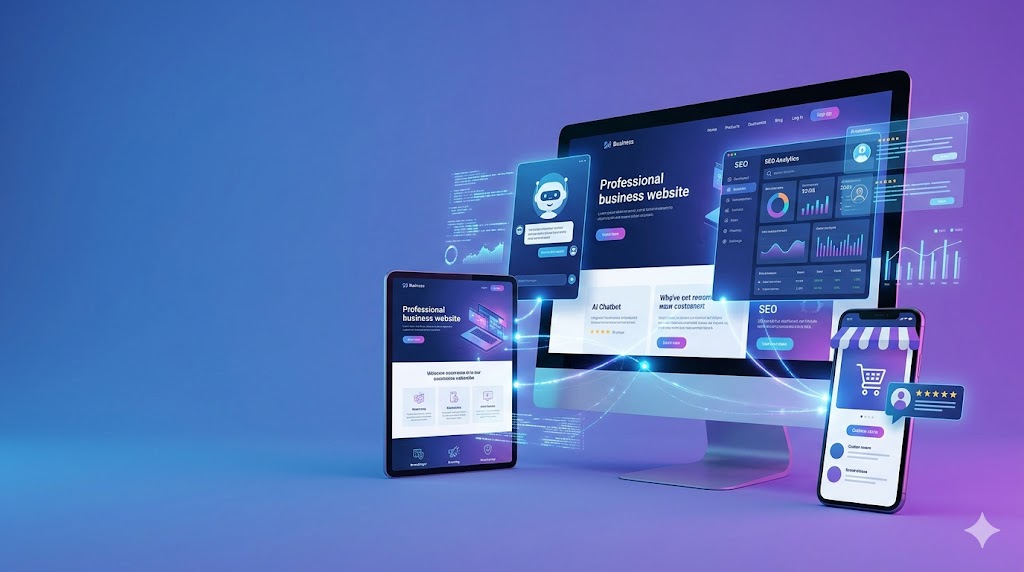
In 2026, having a website is no longer a luxury or an optional marketing asset—it is the foundation of a brand’s digital presence. While social media platforms, online marketplaces, and mobile apps continue to grow, a website remains the only digital property that a business truly owns and controls. Whether you’re a startup, a local business, a personal brand, or a multinational company, a professional website plays a critical role in building credibility, attracting customers, generating revenue, and staying competitive. As consumer behavior continues to evolve, brands that invest in a strong online presence are better positioned to succeed. Here’s why every brand needs a website in 2026. 1. Your Website Is Your Digital Headquarters Social media platforms are important, but they should not be your primary online home. Algorithms change, policies evolve, and accounts can be restricted or suspended without warning. When your brand relies entirely on third-party platforms, you have limited control over your audience and content. A website serves as your digital headquarters. It provides a centralized location where customers can learn about your products, services, values, and contact information. Unlike social media, you control the design, content, functionality, and customer experience. In 2026, consumers expect businesses to have a professional website where they can find accurate and up-to-date information at any time 2. Builds Trust and Credibility Trust is one of the most valuable assets a brand can have. Before making a purchase or contacting a business, many consumers conduct online research. If they cannot find a website, they may question the legitimacy or professionalism of the brand. A well-designed website helps establish credibility by showcasing: Company information Customer testimonials Reviews and ratings Case studies Certifications and awards Contact details Product or service information Consumers are more likely to engage with brands that appear transparent and professional. A website gives potential customers confidence that your business is genuine and trustworthy. 3. Available 24/7 for Customers Unlike physical stores or customer service teams, websites operate around the clock. Customers can browse products, read information, submit inquiries, and make purchases at any time of day. This 24/7 accessibility is particularly important in today’s global marketplace. Customers may visit your website from different cities, countries, and time zones. A website ensures your business remains accessible even when your team is offline. In 2026, convenience is a major factor in customer decision-making, and websites provide the convenience consumers expect. 4. Improves Search Engine Visibility When people need a product, service, or solution, they often begin with a search engine query. Without a website, your brand misses valuable opportunities to appear in search results. Search engine optimization (SEO) helps websites rank for relevant keywords, allowing potential customers to discover your business organically. This creates a consistent stream of traffic without relying solely on paid advertising. Benefits of SEO include: Increased visibility Higher-quality leads Greater brand awareness Long-term marketing value Lower customer acquisition costs In a highly competitive digital environment, brands that invest in SEO gain a significant advantage over those that do not. 5. Gives Full Control Over Brand Identity Branding is more than just a logo. It includes your messaging, visual design, customer experience, and overall perception in the market. Social media platforms offer limited customization options. A website allows complete creative freedom, enabling brands to communicate their identity exactly as intended. Through your website, you can control: Colors and design elements Content structure Customer journeys User experience Brand storytelling Marketing campaigns This level of control helps create a consistent and memorable experience for visitors, strengthening brand recognition and loyalty. 6. Supports E-Commerce Growth Online shopping continues to expand rapidly, making e-commerce an essential component of modern business strategy. A website enables brands to: Sell products directly Accept secure payments Manage inventory Offer promotions Track customer behavior Provide personalized experiences By selling directly through a website, brands can reduce dependence on third-party marketplaces and maintain greater control over customer relationships and profit margins. Even service-based businesses benefit from online booking systems, consultation scheduling, and digital payment options integrated into their websites. 7. Enhances Customer Experience Customer expectations are higher than ever. People want quick access to information, seamless navigation, and personalized experiences. Modern websites can provide: AI-powered chat support Personalized recommendations Self-service resources Interactive tools Knowledge bases Frequently asked questions These features improve customer satisfaction while reducing support workloads. A positive website experience can significantly influence purchasing decisions and encourage repeat business. 8. Generates Valuable Customer Data One of the biggest advantages of having a website is access to customer insights. Website analytics help brands understand: Visitor behavior Traffic sources Popular content Conversion rates Customer demographics Purchase patterns This data enables businesses to make informed decisions and improve marketing performance. In 2026, data-driven strategies are essential for sustainable growth. A website provides valuable information that social media platforms alone cannot offer. 9. Strengthens Digital Marketing Efforts A website serves as the foundation for nearly every digital marketing strategy. Marketing channels that rely on websites include: Search engine optimization (SEO) Content marketing Email marketing Pay-per-click advertising Influencer campaigns Social media promotions Affiliate marketing Without a website, marketing efforts often lack a clear destination where visitors can learn more, take action, or make a purchase. A website transforms marketing traffic into leads, subscribers, and customers. 10. Keeps You Competitive In almost every industry, competitors are investing heavily in their digital presence. Businesses without websites risk losing potential customers to brands that offer easier access to information and services. Consumers increasingly compare businesses online before making decisions. If your competitors have modern, informative websites and you do not, they may appear more established and trustworthy. A website helps level the playing field, allowing small and medium-sized businesses to compete effectively with larger organizations. 11. Supports AI and Voice Search Discovery The rise of artificial intelligence and voice search is changing how consumers find information online. AI assistants and search engines frequently rely on website content to answer user questions and recommend businesses. Brands with well-structured websites are more likely to appear
Hello world!
Welcome to WordPress. This is your first post. Edit or delete it, then start writing!