
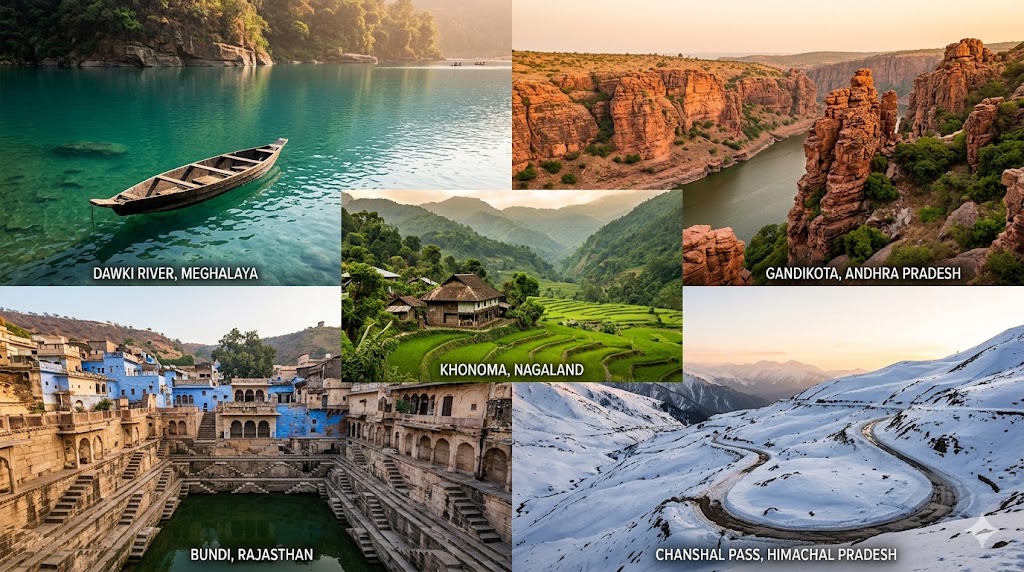
India is a land of incredible diversity, offering everything from snow-capped mountains and pristine beaches to ancient temples and vibrant cities. While famous destinations like Goa, Jaipur, and Manali attract millions of visitors every year, there are countless hidden gems waiting to be explored. These lesser-known destinations provide unique experiences, breathtaking landscapes, and a chance to discover India’s authentic beauty away from crowded tourist hotspots.
Here are ten hidden gems every traveler should consider adding to their bucket list.
1. Tawang, Arunachal Pradesh
Nestled in the eastern Himalayas, Tawang is a stunning destination known for its picturesque mountains, serene lakes, and rich Buddhist culture. The town is home to the famous Tawang Monastery, one of the largest monasteries in India.
Visitors can enjoy breathtaking views of snow-covered peaks, explore traditional villages, and experience the peaceful atmosphere of this remote Himalayan paradise. The best time to visit is between March and October when the weather is pleasant and roads are accessible.
2. Ziro Valley, Arunachal Pradesh
Ziro Valley is a hidden treasure famous for its lush green landscapes, rice fields, and unique tribal culture. Home to the Apatani tribe, the valley offers a fascinating glimpse into traditional lifestyles and sustainable farming practices.
Nature lovers will appreciate the scenic beauty, while music enthusiasts may enjoy the popular Ziro Music Festival held annually. The valley’s calm environment makes it an ideal destination for relaxation and cultural exploration.
3. Majuli, Assam
Majuli is the world’s largest river island and one of India’s most unique destinations. Located on the Brahmaputra River, this island is known for its rich cultural heritage, beautiful landscapes, and traditional Assamese monasteries known as Satras.
Travelers can explore local villages, witness traditional dance performances, and enjoy stunning sunsets over the river. Majuli offers an unforgettable experience for those seeking a peaceful escape into nature and culture.
4. Chopta, Uttarakhand
Often referred to as the “Mini Switzerland of India,” Chopta remains relatively untouched by mass tourism. Surrounded by dense forests and majestic Himalayan peaks, it serves as the starting point for the famous Tungnath and Chandrashila treks.
The region is perfect for hiking, camping, birdwatching, and photography. During winter, snowfall transforms Chopta into a magical wonderland, attracting adventure enthusiasts from across the country.
5. Gokarna, Karnataka
While Goa often steals the spotlight, Gokarna offers a quieter and more laid-back coastal experience. This charming town is known for its pristine beaches, spiritual atmosphere, and stunning cliffside views.
Beaches such as Om Beach, Kudle Beach, and Half Moon Beach provide the perfect setting for relaxation and water activities. Travelers looking for a peaceful beach vacation will find Gokarna an excellent alternative to crowded tourist destinations.
6. Hampi, Karnataka
Although gaining popularity in recent years, Hampi still retains much of its hidden charm. This UNESCO World Heritage Site is filled with ancient ruins, temples, and fascinating rock formations that tell the story of the once-powerful Vijayanagara Empire.
Visitors can explore centuries-old monuments, climb hills for panoramic views, and experience the region’s unique blend of history and natural beauty. Hampi is a dream destination for history buffs and photographers alike.
7. Dzukou Valley, Nagaland
Located on the border of Nagaland and Manipur, Dzukou Valley is often called the “Valley of Flowers of the Northeast.” The valley is famous for its rolling green hills, colorful wildflowers, and breathtaking trekking routes.
During the monsoon season, the valley bursts into vibrant colors, creating a spectacular natural landscape. Adventure seekers and nature lovers will find Dzukou Valley to be one of India’s most rewarding trekking destinations.
8. Mandu, Madhya Pradesh
Mandu is a historic town filled with magnificent palaces, forts, and architectural wonders. Often overlooked by mainstream tourists, this hidden gem offers a fascinating journey into India’s medieval past.
The town is especially beautiful during the monsoon season when lush greenery surrounds its ancient structures. Popular attractions include Jahaz Mahal, Hindola Mahal, and Rani Roopmati’s Pavilion, each showcasing remarkable architectural brilliance.
9. Mawlynnong, Meghalaya
Known as the cleanest village in Asia, Mawlynnong is a perfect example of community-driven environmental conservation. This charming village is surrounded by lush greenery, waterfalls, and living root bridges.
Visitors can enjoy peaceful walks through beautifully maintained pathways, interact with local residents, and experience sustainable tourism practices firsthand. Mawlynnong offers a refreshing break from busy urban life and demonstrates how tourism and environmental responsibility can coexist.
10. Spiti Valley, Himachal Pradesh
Spiti Valley is one of India’s most spectacular yet less-explored destinations. Located high in the Himalayas, the valley features dramatic landscapes, ancient monasteries, and crystal-clear rivers.
Travelers can visit historic monasteries such as Key Monastery, explore remote villages, and experience the unique culture of this cold desert region. The rugged beauty and tranquil atmosphere make Spiti Valley a paradise for adventure seekers and nature enthusiasts.
Why Explore Hidden Destinations?
Traveling to lesser-known destinations offers several advantages. Visitors often enjoy fewer crowds, more authentic cultural experiences, and opportunities to connect with local communities. Hidden gems also allow travelers to discover unique landscapes and traditions that are often overlooked in mainstream travel itineraries.
Exploring these destinations can help support local economies while promoting sustainable tourism. By venturing beyond popular tourist hotspots, travelers contribute to the growth of smaller communities and gain a deeper understanding of India’s rich diversity.
Conclusion
India’s hidden gems offer unforgettable experiences that go beyond the typical tourist trail. From the serene monasteries of Tawang and the lush beauty of Ziro Valley to the dramatic landscapes of Spiti Valley and the pristine beaches of Gokarna, these destinations showcase the incredible variety that India has to offer.
Whether you are an adventure enthusiast, history lover, nature explorer, or cultural traveler, these lesser-known locations promise unique memories and rewarding journeys. The next time you plan a trip, consider stepping off the beaten path and discovering one of these remarkable hidden gems that make India truly extraordinary.